· EuroMedAI Team · Event Recap · 4 min read
Financing Mediterranean AI Capacity: Insights on Talent, Data, and Compute
Key takeaways from our multistakeholder dialogue on bridging the AI divide in the Mediterranean through innovative financing, skills development, and infrastructure building.
Financing Mediterranean AI Capacity: Talent, Data, and Compute
Our recent interactive dialogue brought together policymakers, experts, and civil society to explore actionable pathways for strengthening AI capacity across the Mediterranean. Here are the key insights and outcomes from the session.
Mediterranean AI Skills Integration Framework
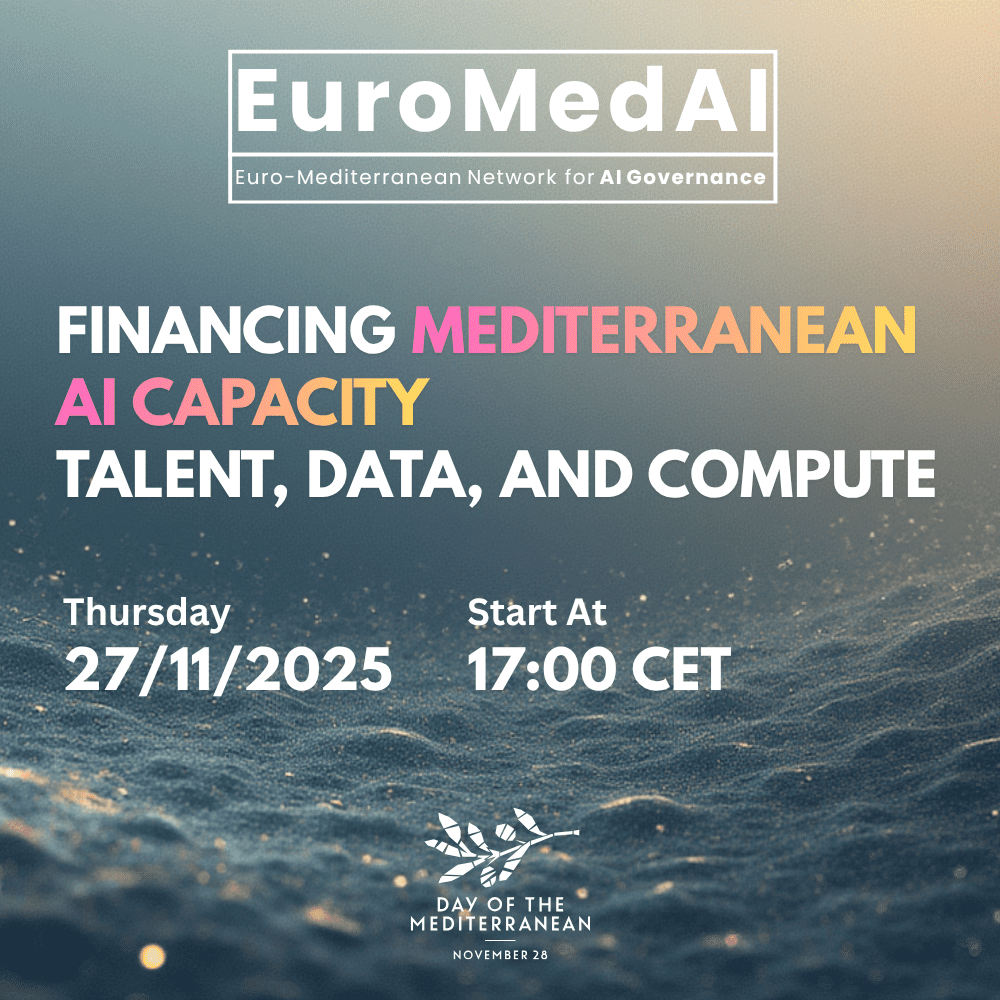
Silvia Vacchi, representing ITU’s AI for Good program, highlighted the critical importance of AI skills in the region. She pointed out current challenges such as fragmented training efforts, a lack of quality standards, and accessibility issues.
Silvia emphasized the need for an integrated AI skills ecosystem, drawing parallels between the goals of the upcoming Pact for the Mediterranean and AI’s potential to transform key sectors like water security, clean energy, and agriculture. She proposed a Mediterranean AI skills framework to align existing efforts, focusing on:
- Shared competencies
- Trainer hubs
- Digital credentials
- Sustainable financing models
AI Hub for Sustainable Development
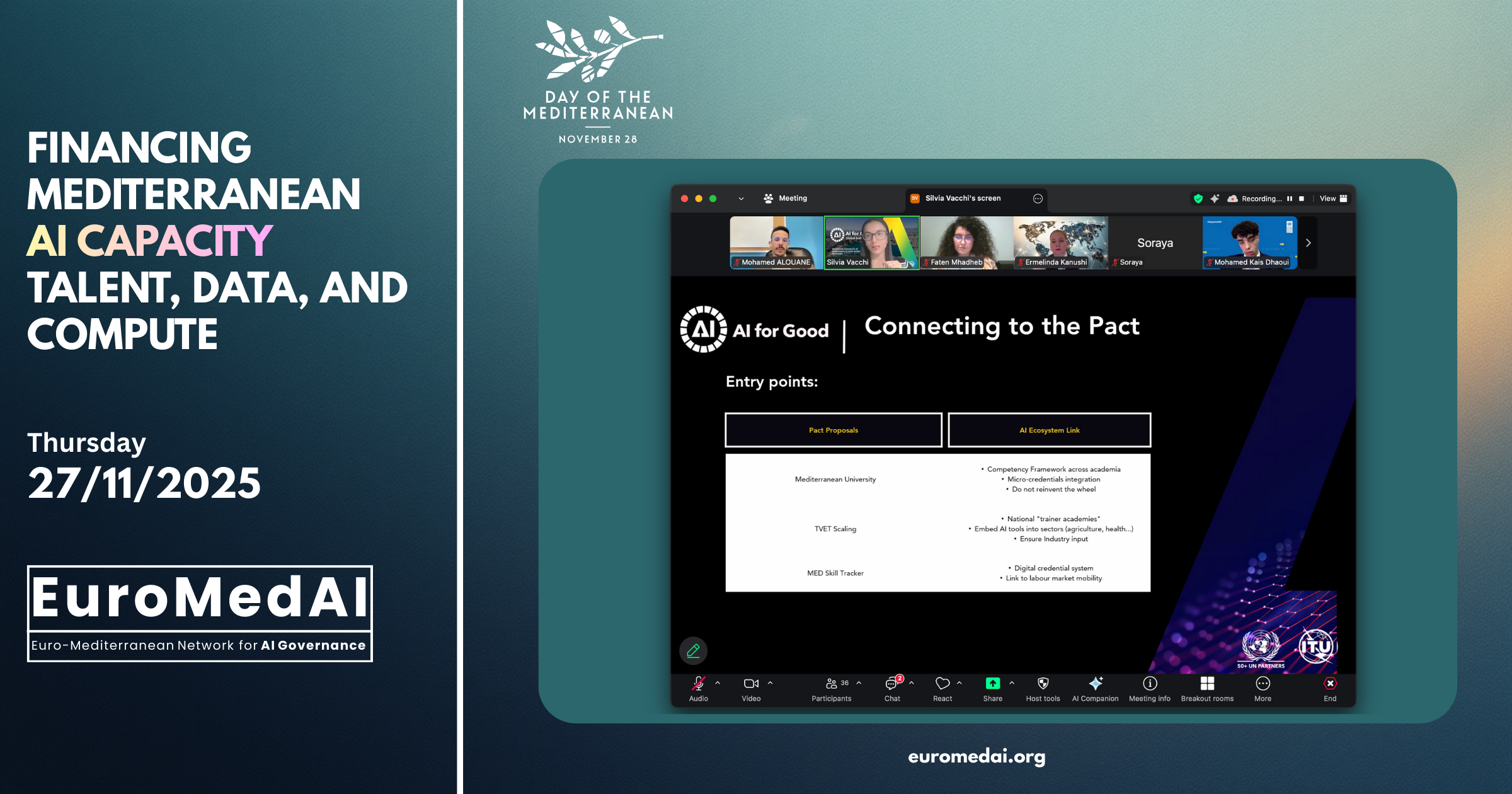
The session also focused on the AI Hub for Sustainable Development, a global initiative launched by UNDP in partnership with the Italian Ministry of Enterprises. Mohamed Kais Dhaoui presented the hub’s flagship programs:
- Compute Accelerator: Providing compute resources to innovators.
- AI Infrastructure Builder: Offering technical mentorship and international partnerships.
Discussion centered on the challenges and opportunities in scaling AI adoption, particularly in priority sectors like energy, agriculture, and healthcare. The conversation highlighted partnerships with major tech partners like Cheneka, AWS, and Microsoft.
AI Literacy and Project Success
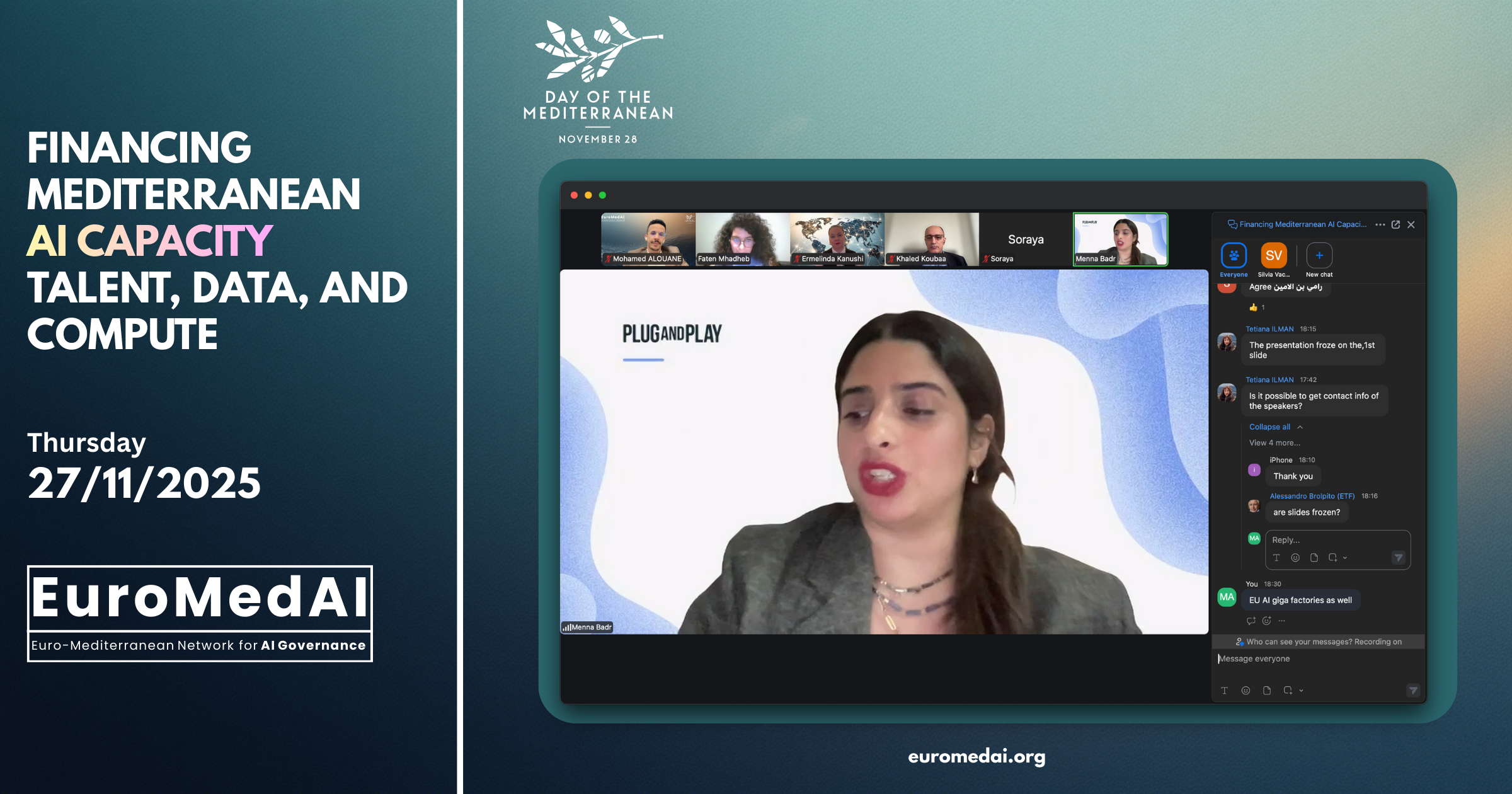
Soraya Kouadri addressed the “ROI challenge” of AI, noting that only 20% of AI pilots successfully scale up, leaving the vast majority struggling to deliver value. She argued that critical AI literacy is essential to avoid misuse and mistrust.
Soraya emphasized the digital and AI divide in the Mediterranean, calling for:
- Centralized efforts combined with local community empowerment.
- Updated AI curricula.
- Continuous learning opportunities to bridge the literacy gap.
She proposed a taxonomy for AI literacy that includes fundamental understanding, ethical awareness, and practical application skills. Comparing regional goals to Saudi Arabia’s target of 40% AI literacy by 2030, she recommended integrating AI into education systems, creating local language resources, and establishing public-private partnerships.
AI Worthiness in Mediterranean Countries
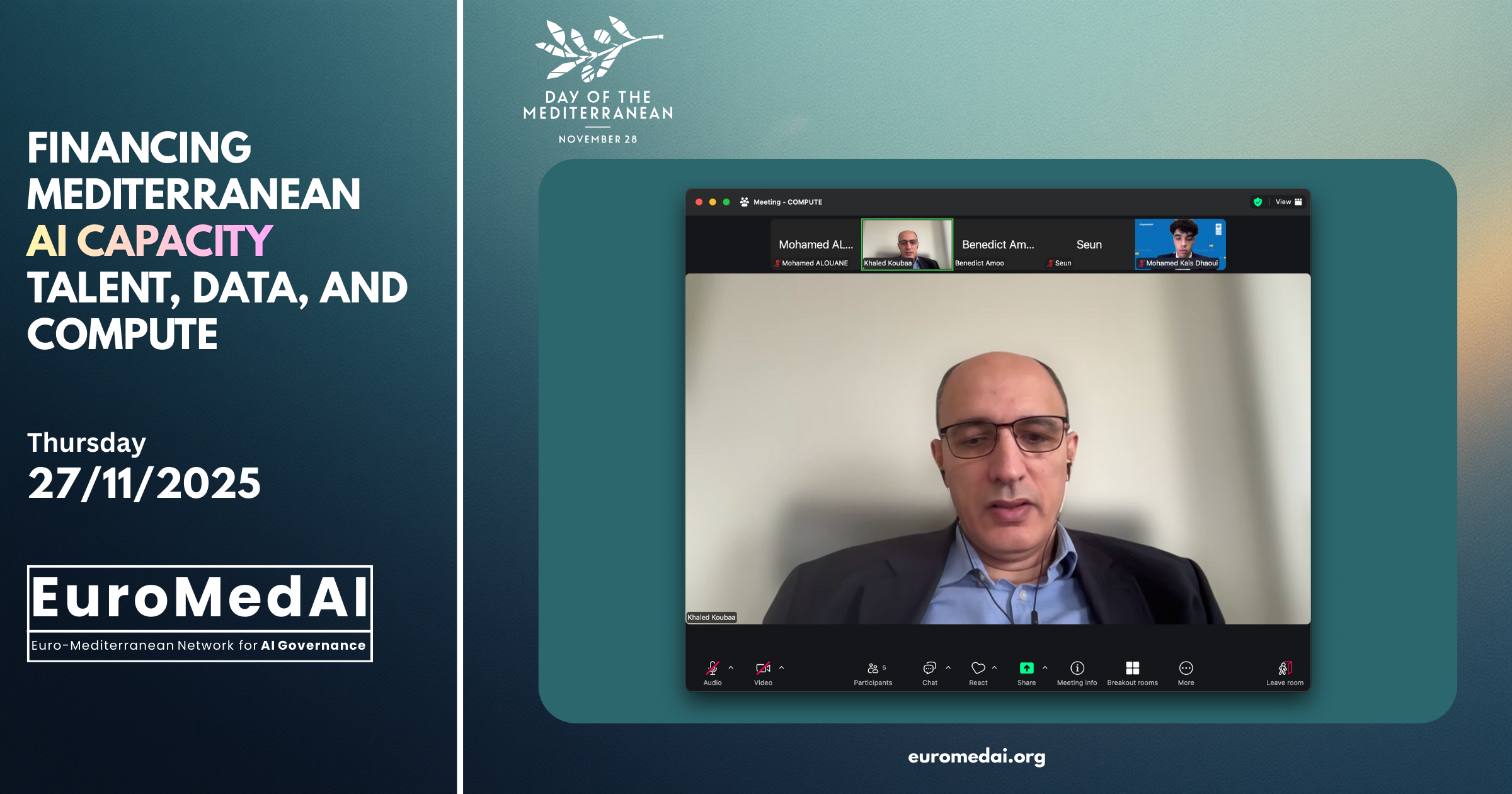
Khaled Koubaa presented Atworthy Technology’s analysis of “AI worthiness” in Southern Mediterranean countries. The analysis identified a structural gap where most countries are currently “bystanders” rather than “builders” or “deployers.”
Khaled outlined four key pillars of AI worthiness: Standards, Talent, Adoption, and Resources. While countries like Egypt, Jordan, Tunisia, and Morocco are making progress, gaps remain in:
- Basic infrastructure
- Talent development programs
- Compute capacity
- Research funding
The recommendation for policymakers is to focus on building AI-grade compute capabilities and developing AI-focused projects that demonstrate public value.
AI Infrastructure and Talent Development
The dialogue underscored the need for tailored infrastructure strategies, including connectivity backbones, reliable energy, AI-ready data centers, and access to GPUs. Khaled Koubaa suggested funding through public investment, development banks, and partnerships with hyperscalers.
Menna Badr from Plug and Play Tech Center shared their work in supporting local AI talent through accelerator programs and corporate innovation. She announced an upcoming AI Center of Excellence in Egypt, which aims to enable startups and public institutions through technical support and regulatory workshops. A success story was shared regarding RAID AI, a startup that gained international exposure through their network.
Mediterranean AI Talent Retention Strategies
Catherine Schneider presented data on labor market dynamics, highlighting the global race for AI talent and the Mediterranean’s significant contribution to the European AI workforce.
She emphasized the challenge of brain drain and the need for sector-specific AI literacy programs to retain talent. Breakout discussions revealed a strong interest among participants in collaborating and sharing AI training packages.
The EuroMedAI network will continue to populate a shared document with these ideas and circulate the final report for further comment, driving collective action for a stronger Euro-Mediterranean partnership in AI.